
How to Choose the Best Gym Accessories for Your Workout
Creating a space where your workout actually takes place comes from more than just having a treadmill or a dumbbell rack. The little extras like resistance tools, balance aids, and grip equipment can make a big difference to the consistency and effectiveness of your training. The right accessories can make the difference between a workout that never makes any further progress and one that keeps going. Let’s discuss.
Why the Right Gym Accessories Matter
Whether you’re exercising at a commercial gym or a spare room in your house, the right gym accessories make for a flexible workout. A strategic selection of accessories enables your work to progress to meet your targets without the need for a full change-out of equipment.
- Target specific muscle groups that machines often miss
- Add variety to routines that start to feel repetitive
- Adapt a single space for strength, cardio, and mobility work
- Cost less and take up less room than large equipment
What are the Types of Training Tools to Look For?
Not everything is created equal, and it is helpful to keep your big fitness picture in mind before purchasing training tools.
Fitness Accessories for Strength Training
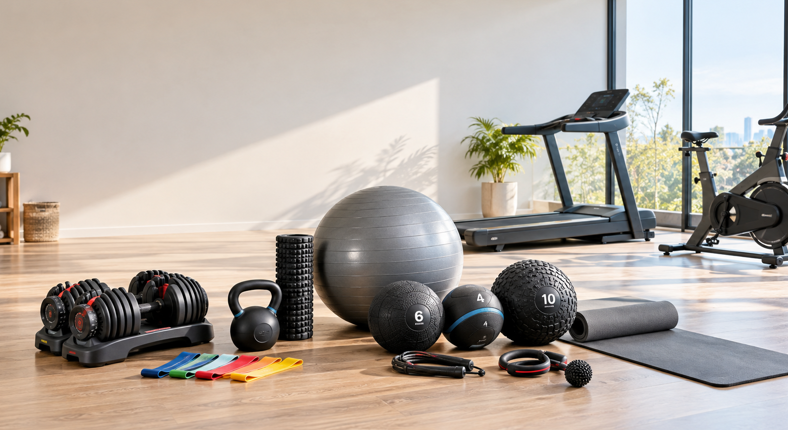
To increase strength, look for tools that introduce stability or instability to the fundamental movements. Common fitness accessories of this type include:
- Resistance bands and loop bands
- Weighted vests
- Grip strengtheners and wrist wraps
- Ankle and wrist weights
These are particularly helpful to supplement free weights, as they allow you to target smaller muscle groups that may be overlooked with free weights.
Tools for Cardio and Mobility
For cardio and movement training, there are other tools needed that range from skipping a rope to using an agility ladder to a foam roller and stretching straps. Typically they’re small, but they can make a significant difference in recovery time and the quality of your movement when recovering in between heavier sessions.
How to Choose the Best Gym Accessories for Your Space
Choosing the right equipment isn’t all about the good looks online. Some simple considerations help make the decision:
- Space available: For small home gyms where floor space is an issue, stackable equipment works well.
- Goal: Users who are focused on strength will prioritize weighted tools, whereas users seeking mobility or recovery will target bands and rollers.
- Reliability: For outdoor or hard-floor items, check for tear resistance and stitched or reinforced fabrics.
- Storage: Wall-mounted racks or storage bins keep smaller items organized and easy to grab mid-session.
- Budget: Not all the best gym equipment is expensive, but cheap gear also wears out quickly and needs replacing sooner.
What’s the Difference Between an Exercise Ball and a Slam Ball?
Both are must-have tools for a complete gym kit, but they work in very different ways on the body.
Core Strength and Balance
With an exercise ball, your stabilizer muscles are engaged by adding instability to simple exercises such as planks, wall squats, and seated stretches. It is also commonly beneficial for physiotherapy and rehabilitation low-load training.
Power and Conditioning
A slam ball is constructed for fast action. The no-bounce shell keeps it in the air after being thrown, perfect for overhead throws, rotation, and full-body conditioning exercises.
Which Training Tool Is Right for You?
Here’s a quick side-by-side look at how the most popular accessories stack up:
| Accessory | Best For | Space Needed | Skill Level |
| Resistance bands | Strength, rehab | Minimal | Beginner |
| Exercise ball | Core, balance | Low | Beginner–Intermediate |
| Foam roller | Recovery, mobility | Minimal | All levels |
| Skipping rope | Cardio, coordination | Minimal | All levels |
What are the Tips for Choosing Quality Gym Accessories
With a few quality checks, you can avoid replacing gear in a few months. Consider the following before purchasing them:
Check the Material Quality
Accessories that are dropped, slammed, or dragged across the floor are typically not capable of lasting as long as rubber or reinforced vinyl. When in doubt, inspect the product before purchasing it to avoid needing to replace worn parts several months later.
Confirm the Weight and Sizing
Weight sizes vary from brand to brand, so measure weight appropriateness before purchase, particularly for weighted balls, vests, and bands. Reading a product specification sheet can save a lot of embarrassment in return later down the trail.
Look for Non-Slip Grip
A break on textured or non-slip surfaces can make a world of difference while working up a sweat, especially with weighted or throw-based tools. It also helps to reduce the risk of equipment falling during the set.
Buy From a Trusted Supplier
A supplier that provides warranties will likely feel confident about the quality of their construction, and a small, working unit will give you an easy way to grow later. Replacement parts and repairs are also much simpler to resolve with a trusted supplier.
Conclusion
Gym accessories should align with your actual fitness objectives and be used continually, not just in the corner! If you’re setting up more equipment for an at-home gym but you’re not sure what to get, begin with some strength, mobility, and conditioning equipment for a solid building block.
FAQs
Are gym accessories worth buying for a home gym?
Yes. They are typically affordable, take up little space, and offer a much wider range of training than bigger machines alone.
What’s the difference between a stability ball and a weighted throw ball?
One helps with balance and core stability work; the other is designed for exercises that are explosive and high-impact, a throwing exercise that does not bounce back after slamming down.
See also: When Is AI the Wrong Investment for a Mobile Product?
How do I know which training tools to start with?
Don’t buy everything at once, since your technique training and recovery tools should match your main priorities: resistance bands for strengthening, a foam roller for recovery, or a weighted ball for conditioning.