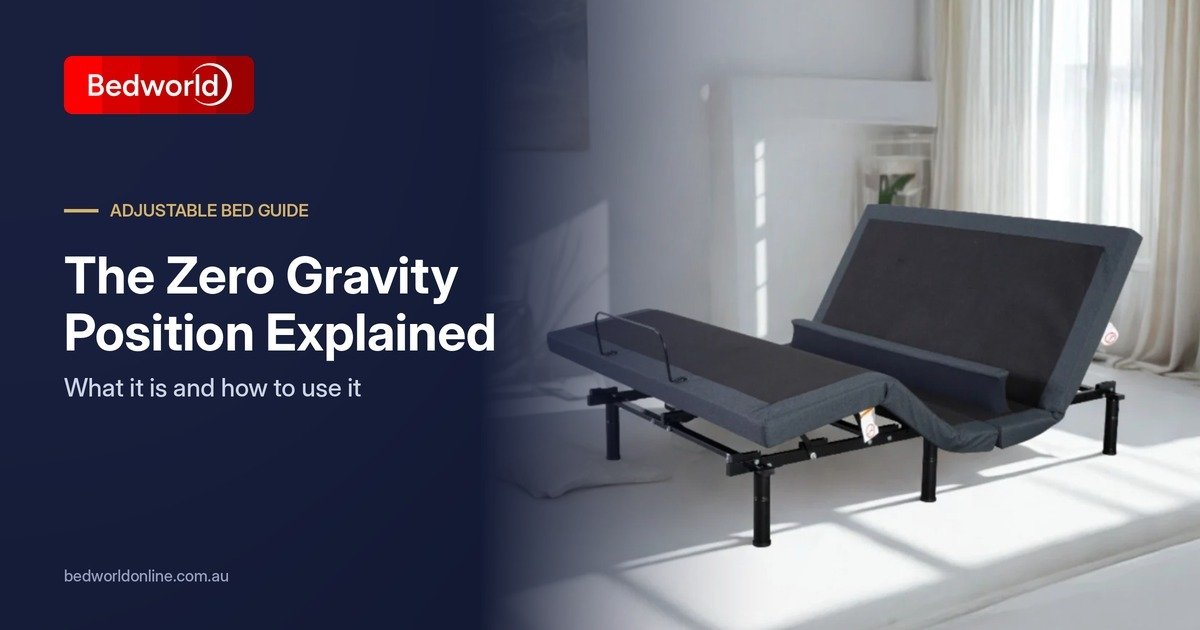

Pick up the remote of almost any adjustable bed and you’ll find a button marked “Zero G” or “Zero Gravity”. It sounds like marketing, and plenty of owners press it once, shrug and go back to raising the head manually. That’s a shame, because the position is based on a genuine idea and, used well, it’s one of the most comfortable settings on the bed. If you’re comparing electric adjustable beds in Perth or already own one, here’s what zero gravity really means and how to make it work for you.
What Is the Zero Gravity Position?
In the zero gravity position, the base raises your head and upper body slightly and lifts your knees, so your legs rest a little above the level of your heart. Instead of lying flat or sitting up, you recline in a gentle, even curve, a bit like a well-designed lounge chair.
The aim is to spread your body weight more evenly across the mattress. Lying flat puts more load through the lower back and heels, while sitting upright concentrates it on the tailbone. The zero gravity shape sits between the two.
Where the Idea Comes From
The name comes from NASA. Researchers studying astronauts in weightlessness, including aboard the Skylab space station, observed that a fully relaxed body in microgravity naturally settles into a semi-reclined shape: hips and knees bent, arms floating forward and the spine gently curved. They called this the neutral body posture.
On Earth, gravity pulls us flat. An adjustable bed can’t remove gravity, but it can support the body in a shape close to that neutral posture. That’s all “zero gravity” means on a bed remote: a preset that approximates the posture your body would choose if nothing were pulling on it.
Zero Gravity vs Simply Raising the Head
Raising only the head section is great for reading or watching TV. On its own, though, it can cause you to slide down the bed over time and puts more weight through your lower back and hips.
Zero gravity raises the knees at the same time. That small bend stops you sliding, relaxes the hamstrings and lets the lower back settle into the mattress. It’s the difference between propping yourself up on pillows and lying back in a recliner.
Not Every Zero Gravity Preset Is the Same
There’s no single official angle for zero gravity, so each manufacturer sets its own. Some presets are a gentle recline, others a deeper one. Some bases add extra adjustment on top. The Mlily iActive Supreme 3 Motor Adjustable Bed Base, for example, pairs its Zero G preset with a separate lumbar motor, so you can add support to the curve of your lower back once you’re reclined. When you test a bed, try the zero gravity preset for several minutes, not just a few seconds, and check whether you can fine-tune it and save your adjusted version.
How to Use Zero Gravity Day to Day
- Winding down. Many people use it for 15 to 30 minutes before sleep to relax, read or listen to something.
- After a long day on your feet. Raising the legs above heart level is a comfortable way to rest tired legs.
- Reading and screens. Combine a slight zero gravity recline with a little extra head lift for a supported reading position.
- Falling asleep. Some back sleepers find they drift off more easily in zero gravity, then lower the bed or let a timer return it to flat.
- Save your version. If the factory preset isn’t quite right, adjust it and store your favourite angle in a memory button.
Who It Suits, and Who It Doesn’t
Zero gravity works best for back sleepers and anyone who likes to relax on their back before sleep. It can also suit people who find lying completely flat uncomfortable.
It’s less natural for side and stomach sleepers, since the bend at the hips and knees doesn’t suit those positions all night. Many use it to wind down, then return to flat to sleep.
If you have a medical condition, such as a back, heart or circulation problem, ask your GP or physiotherapist which positions suit you before relying on any preset.
Getting the Most From It
- Pair it with a flexible mattress. Foam, latex and many pocket spring or hybrid mattresses bend well. Stiff, connected-coil mattresses fight the shape.
- Rethink your pillow. With your upper body raised, a thinner pillow often keeps your neck better aligned.
- Try it for a week. The first few nights can feel unusual. Give your body time to adjust before deciding.
Frequently Asked Questions
Is it safe to sleep in zero gravity all night?
For most healthy adults it’s simply a comfortable reclined position. Some people sleep in it all night, while others prefer to use it to relax and then lower the bed.
Does zero gravity help back pain?
Many people find it comfortable because it reduces load on the lower back. Comfort is individual, though, so test it properly and speak to a health professional about ongoing pain.
Can couples use zero gravity if only one person likes it?
Yes, with a split base. Two long singles on a split king let each person set their own position.
Is zero gravity the same as the anti-snore preset?
No. Anti-snore presets usually raise only the head a little, while zero gravity raises both the head and the knees.
Conclusion
Zero gravity isn’t a gimmick. It’s a practical way to recline in a shape inspired by how the body rests in weightlessness. It spreads your weight more evenly, stops you sliding down the bed and makes winding down more comfortable. Test the preset properly, adjust it to suit you, and use it the way that fits your sleep, whether that’s all night or just the half hour before lights out.