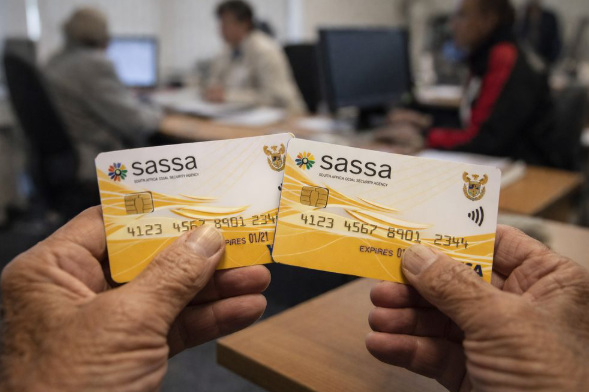

Child Support Grant R580: Who Qualifies and When It Pays
The Child Support Grant is the most widely received SASSA grant in South Africa. It pays R580 per child per month to the person who looks after the child. If you are caring for a child and you are struggling financially, this grant may be for you.
This article explains who qualifies, what documents you need, when the grant pays, and what the Child Support Grant Top-Up is.
Who can apply
You do not have to be the biological parent to apply. SASSA calls the applicant the primary caregiver. A primary caregiver is the adult who is responsible for the day-to-day care of the child.
A grandmother, aunt, older sibling, or family friend can apply. The requirement is that you are the person actually caring for the child, and that you can prove it.
The child must be a South African citizen or permanent resident. The child must be under 18 years old. Once a child turns 18, the grant stops.
You, the caregiver, must also be a South African citizen, permanent resident or refugee. You must pass a means test. SASSA checks your income and assets. If your income or assets are above the threshold, you do not qualify.
What counts as income for the means test
The means test for the Child Support Grant looks at the caregiver’s income, not the child’s. SASSA checks both income and assets.
If you are single, the income limit is different from the limit if you are married. SASSA checks the combined income of a married couple. If your total income is above the threshold, the application will be declined.
The thresholds are set by government and can change. Check the current limits on the official SASSA website at sassa.gov.za before you apply.
Documents you need
Bring these to the SASSA office when you apply:
- Your South African ID document or passport
- The child’s birth certificate (unabridged, not just the short version)
- Proof that you are the primary caregiver, if you are not the biological parent
- Your bank account details, in your own name
- Proof of income, such as payslips or a letter from your employer
If you are unemployed, bring a sworn affidavit confirming this. SASSA offices have a commissioner of oaths who can help you.
If the child’s parents are alive but not caring for the child, SASSA may ask for additional documents showing why you are the caregiver instead.
What happens after you apply
SASSA will process your application and let you know if it was approved. If approved, payments start from the date SASSA received your application, not from the date of approval. This means that if there was a delay in processing, you may receive back payments.
SASSA pays into the bank account you provided. The account must be in your name.
When the Child Support Grant pays
SASSA publishes a payment schedule every year for permanent grants. The schedule lists three columns: Older Persons, Disability, and Children’s Grants.
Children’s Grants are paid last in the monthly cycle. Older Persons are paid first, then Disability, then Children’s Grants. This is why a grandmother receiving the Older Persons Grant may be paid days before her grandchild’s Child Support Grant arrives.
The exact dates for each month are published by the Department of Social Development. Once the year’s schedule is out, you can check when Children’s Grants are due for each month.
For payment dates and more information, visit MySRD, an independent information website that is not connected to SASSA or government.
See also: Google Local Services Ads for Local Businesses
What if your application is declined
SASSA will give you a reason for the decline. Common reasons include:
- Income above the means test threshold
- Missing documents
- The child’s birth certificate not matching the ID records
You have the right to appeal a decline. The appeal goes to the Independent Tribunal, not back to the same SASSA office. Contact SASSA for the appeal process.
SASSA toll-free: 0800 60 10 11 SASSA WhatsApp: 082 046 8553
The Child Support Grant Top-Up: what it is and what it is not
There is a separate payment called the Child Support Grant Top-Up. Many people confuse it with the regular Child Support Grant.
The Top-Up is not extra money for caregivers who are already receiving the Child Support Grant. It is not an increase you can apply for.
The Top-Up is a separate grant for orphans who are in the care of a relative, where there is no court order for foster care. It is for children who have lost both parents and are being looked after by a family member, but where the family has not gone through the formal foster care process.
If there is a court order in place, the caregiver should be looking at the Foster Care Grant instead, which pays R1,290 per child per month. That is a higher amount, and it requires a Children’s Court order.
If there is no court order and the child is an orphan being cared for by a relative, the Top-Up may apply. Speak to your nearest SASSA office to find out if the child qualifies.
How the Child Support Grant Top-Up works in practice
Because the Top-Up is for orphans in informal family care, the relative caring for the child applies in the same way as any primary caregiver. The difference is that the child’s orphan status and the absence of a court order are what makes the Top-Up available.
The Top-Up amount is added on top of the standard Child Support Grant. The total received is more than the basic R580. The exact additional amount is set by government.
If you are caring for an orphan and you already receive the Child Support Grant for that child, speak to SASSA about whether the Top-Up applies to your situation.
A note on payment into someone else’s account
SASSA requires the payment to go into an account in the caregiver’s own name. Payments cannot go into a child’s account, a partner’s account, or an account belonging to someone else.
If your bank account details change, update them at the SASSA office as soon as possible. A delay in updating details can pause your payment.