
How Fire and Safety Compliance Protects People and Property
Fire and safety compliance is an important part of protecting people, buildings, equipment, and valuable assets from the risks associated with fire. Fires can spread quickly, create hazardous smoke, damage structural components, and disrupt business operations. A well-planned approach to fire and safety compliance helps organisations identify potential hazards, maintain appropriate safety measures, prepare occupants for emergencies, and meet applicable legal requirements.
Rather than focusing only on what happens during a fire, effective compliance involves prevention, preparedness, inspection, maintenance, and ongoing improvement. Understanding these elements can help property owners, managers, employers, and occupants create safer environments.
What Is Fire and Safety Compliance?
Fire and safety compliance refers to following applicable fire prevention and safety requirements designed to reduce risks and protect people and property. Requirements can vary depending on the type of building, its purpose, occupancy, size, location, and the activities carried out inside it.
Compliance may involve several areas, including fire detection systems, emergency exits, fire extinguishers, emergency lighting, evacuation procedures, staff training, inspections, maintenance, and record keeping.
See also: How a Hard Disk Disposal Service Helps Protect Sensitive Data
Why Compliance Matters
A fire safety system is only effective when it is properly selected, installed, maintained, and used. A building may have fire extinguishers and alarms, for example, but poorly maintained equipment or blocked escape routes can reduce their effectiveness.
Regular compliance checks help identify problems before they become serious hazards. They also help ensure that people understand what to do if an emergency occurs.
How Fire and Safety Compliance Protects People
The most important purpose of fire safety measures is protecting human life. During a fire, smoke, heat, flames, and panic can create dangerous conditions within minutes.
Early Fire Detection
Fire detection systems can provide an early warning when smoke, heat, or other signs of fire are detected. Early notification gives occupants more time to respond and begin evacuation.
The effectiveness of detection depends on appropriate equipment, correct placement, testing, and maintenance. Regular checks can help identify faults and ensure systems remain operational.
Safe Evacuation
Clear and accessible escape routes are essential during an emergency. Fire and safety compliance includes measures intended to keep emergency exits usable and clearly identifiable.
Escape routes should not be blocked by furniture, stock, equipment, waste, or other objects. Emergency exits, signs, lighting, and evacuation procedures should also be reviewed regularly.
Emergency Preparedness
People are more likely to respond effectively when they understand emergency procedures before a fire occurs. Evacuation plans, fire drills, training, and clear communication can help occupants understand where to go and what actions to take.
Emergency planning should also consider people who may require additional assistance during evacuation.
How Fire and Safety Compliance Protects Property
Fire safety compliance also helps reduce the potential for extensive property damage. While no system can guarantee that a fire will not cause damage, prevention and early response can help limit its impact.
Reducing Fire Hazards
Identifying potential ignition sources and combustible materials is an important part of fire prevention. Electrical equipment, cooking areas, heating systems, flammable materials, waste, and overloaded electrical circuits can all require careful management depending on the environment.
Regular risk assessments can help identify hazards and determine appropriate control measures.
Protecting Building Systems and Equipment
Fire can damage electrical systems, machinery, computers, stock, furniture, documents, and structural components. Appropriate fire protection measures can help reduce the likelihood that a small incident develops into a major event.
Maintaining fire protection equipment is particularly important because equipment that is damaged, expired, inaccessible, or unsuitable may not perform as intended.
Key Elements of Fire and Safety Compliance
Effective fire safety involves multiple measures working together rather than relying on a single piece of equipment.
Fire Extinguishers and Firefighting Equipment
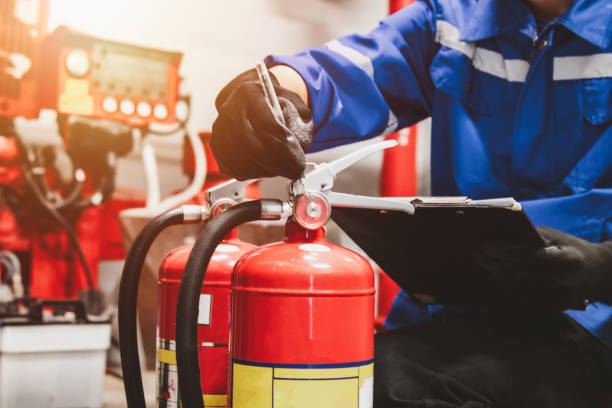
Fire extinguishers and other firefighting equipment should be suitable for the risks present in the building. Their location should be accessible, and they should be inspected and maintained according to applicable requirements.
People should also receive appropriate guidance on emergency procedures and, where relevant, the safe use of firefighting equipment.
Emergency Lighting and Signage
Smoke, power failures, and poor visibility can make evacuation more difficult. Emergency lighting can help illuminate escape routes when normal lighting is unavailable.
Safety signs can also help occupants identify exits, emergency equipment, and important instructions.
Fire Doors and Compartmentation
Fire-resistant doors and building compartmentation can help restrict the spread of fire and smoke. Their condition and operation should be checked regularly.
Doors should not be improperly wedged open or altered in ways that could compromise their intended fire performance.
Fire Alarms and Detection Systems
Fire alarms provide an important warning mechanism. Systems should be tested and maintained according to applicable requirements, with faults addressed promptly.
Regular testing can also help ensure occupants recognise the alarm and understand the required response.
The Importance of Fire Risk Assessments
A fire risk assessment helps identify hazards, evaluate potential risks, and determine appropriate safety measures.
Identifying Potential Hazards
An assessment may consider ignition sources, combustible materials, electrical equipment, storage arrangements, escape routes, occupancy, vulnerable occupants, and existing fire protection measures.
The exact assessment requirements depend on the building and applicable regulations.
Reviewing Existing Controls
Identifying a hazard is only the first step. Existing controls should also be reviewed to determine whether they remain suitable and effective.
Changes to building layouts, equipment, occupancy, storage, or work activities may create new risks. Fire safety arrangements should therefore be reviewed when significant changes occur.
Training and Employee Awareness
Fire safety procedures are more effective when people understand their responsibilities.
Fire Safety Training
Training can cover emergency procedures, evacuation routes, alarm arrangements, reporting hazards, and other relevant responsibilities. The level and type of training should reflect the risks associated with the workplace.
Fire Drills
Fire drills provide an opportunity to practise evacuation procedures in a controlled setting. They can reveal issues such as confusion about assembly points, blocked routes, inadequate communication, or difficulties assisting certain occupants.
Lessons identified during drills should be reviewed and used to improve emergency procedures.
Regular Inspection and Maintenance
Compliance is not a one-time activity. Fire safety equipment and procedures need ongoing attention.
Scheduled Checks
Regular inspections can identify damaged equipment, expired components, blocked exits, faulty alarms, damaged fire doors, missing signage, and other issues.
Maintenance schedules should reflect the type of equipment, manufacturer requirements, building conditions, and applicable regulations.
Keeping Accurate Records
Records can provide evidence that inspections, testing, training, maintenance, and corrective actions have been completed.
Good record keeping can also help responsible personnel identify recurring issues and determine when additional action is required.
Common Fire and Safety Compliance Issues
Some problems can develop gradually and may be overlooked during routine operations.
Blocked Emergency Exits
Storage and workplace equipment should never interfere with designated escape routes. Even temporary obstructions can create problems during an emergency.
Poor Equipment Maintenance
Fire safety equipment requires appropriate inspection and maintenance. Neglected equipment may fail when it is needed most.
Lack of Staff Training
Employees who are unfamiliar with evacuation procedures may hesitate or make unsafe decisions during an emergency.
Outdated Emergency Plans
Changes to buildings, staff, layouts, equipment, or business activities can make existing emergency plans outdated. Plans should therefore be reviewed and updated when necessary.
Building a Strong Fire Safety Culture
Fire and safety compliance is most effective when it becomes part of everyday workplace and property management practices. Everyone should understand that fire safety is an ongoing responsibility rather than something addressed only before an inspection.
Encouraging employees and occupants to report hazards, keeping escape routes clear, maintaining equipment, reviewing procedures, and conducting appropriate training can contribute to a safer environment.
Conclusion
Fire and safety compliance plays a vital role in protecting people and property from the effects of fire. Effective compliance combines prevention, detection, evacuation planning, firefighting equipment, building protection, training, inspections, maintenance, and record keeping.
Regular reviews are essential because risks can change over time. By identifying hazards early, maintaining safety systems, keeping emergency routes accessible, and ensuring people understand emergency procedures, organisations can improve their overall preparedness and reduce the potential consequences of a fire.