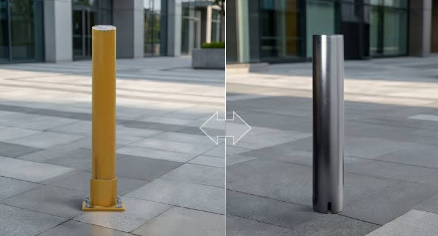

Concrete bollards are an essential safety feature in modern urban and commercial environments. Their robust construction and substantial mass provide a formidable barrier against vehicular threats, protecting both pedestrians and property. This article explores the functions, benefits, and practical applications of concrete bollards, emphasising their role as effective safety solutions.
Introduction to Concrete Bollards
Concrete bollards are short, stout posts typically installed in the ground to restrict vehicle access and enhance security. They are designed to absorb and deflect impact, thereby preventing unauthorised vehicle entry or accidental collisions with structures. Their durability and versatility make them suitable for a wide range of safety and security applications.
Primary Functions of Concrete Bollards
The primary function of concrete bollards is to provide a physical barrier that controls traffic flow and prevents vehicle intrusion in designated pedestrian or protected zones. They serve to safeguard buildings, utilities, and public spaces from potential damage caused by vehicles. Additionally, bollards can delineate pathways, ensuring safe segregation between pedestrian and vehicular areas.
Material and Design Advantages
Concrete is favoured for bollards due to its strength, longevity, and resistance to environmental factors. Unlike metal alternatives, concrete bollards require less maintenance, as they do not corrode or rust. Their mass and density deliver superior impact resistance, making them ideal for high-risk environments. Moreover, concrete can be coloured or textured to complement urban aesthetics.
Installation Methods for Concrete Bollards
There are various installation techniques for concrete bollards, including in-ground fixing and surface mounting. In-ground installation involves embedding the bollard securely into the soil or a concrete foundation, enhancing stability and impact resistance. This method is particularly recommended for areas experiencing high safety demands.
In-Ground Bollards
In-ground concrete bollards are embedded to a significant depth beneath the surface, which provides superior structural integrity. This installation type is suitable for permanent safety installations, such as protecting storefronts, government buildings, and sensitive infrastructural facilities.
Applications of Concrete Bollards
Concrete bollards are utilised in a variety of sectors, including urban planning, commercial premises, transport hubs, and public spaces. They are effective in preventing vehicle ramming attacks, reducing the risk of accidental crashes, and managing traffic in crowded areas. Their applications extend to parking controls, pedestrian safety zones, and protection of outdoor equipment.
Urban Environments
In urban settings, concrete bollards protect pedestrians from fast-moving vehicles and designate safe walking areas. They are commonly installed along sidewalks, near transit stations, and at entrances to restricted zones. The bollards contribute to improved urban safety while allowing unobstructed pedestrian movement.
Commercial and Industrial Settings
Commercial facilities use bollards to shield buildings from delivery trucks and unauthorised vehicles. Industries also benefit by restricting access to hazardous sites and protecting machinery. Concrete bollards form an integral part of safety measures and regulatory compliance in these contexts.
Benefits of Choosing Concrete Bollards
Concrete bollards offer several advantages including cost-effectiveness, durability, and environmental resilience. Their low maintenance requirements reduce operational costs over time. Furthermore, concrete bollards provide a strong and reliable security solution backed by proven performance in impact tests.
Customisation Options
Concrete bollards can be customised to meet specific functional and aesthetic requirements. Available in a range of shapes, sizes, and finishes, they can blend with architectural designs or stand out as visual deterrents. Some bollards incorporate reflective paint or lighting features to enhance visibility during night-time.
Regulatory Compliance and Safety Standards
Safety standards and regulations increasingly recommend or mandate the installation of concrete bollards in vulnerable locations. Compliance ensures that the protective measures meet minimum requirements for impact resistance and spacing. Installing concrete bollards according to guidelines also helps in risk management and liability reduction.
Maintenance and Longevity
Concrete bollards are designed for longevity with minimal maintenance. Periodic inspection for surface cracks or damage suffices to maintain their effectiveness. In the event of impact, individual bollards can be replaced without disrupting the entire installation. This flexibility enhances the practicality of concrete bollards in long-term safety planning.
Conclusion
Concrete bollards present a dependable, durable, and efficient solution for various safety and security needs. Their capacity to protect infrastructure and pedestrians, coupled with ease of installation and low maintenance, make them a preferred choice for safety professionals worldwide. Implementing concrete bollards in appropriate settings significantly boosts overall safety and risk mitigation efforts.